The didgeridoohickey - a simple stand for a didgeridoo
Keeping a didgeridoo handy to fight off sleep apnea.
As part of my quest to improve my sleep apnea, I have taken up playing a didgeridoo. More accurately, I make noises using the didgeridoo to strengthen the muscles of my upper airways - nobody is going to mistake the resulting aurical assault for music.
There have been several studies showing the positive effects on sleep apnea of playing the didgeridoo, including one that compared it with other wind instruments. It turns out that of all the wind instruments tested, only the didgeridoo and double reed wood wind instruments have an effect on the severity of sleep apnea.
I bought a teak wood didgeridoo from a company here in Germany. They have them made out of left over branches on a teak plantation in Indonesia. The outside is just the way it grew on the tree, while the inside was carved out by machine and hand tools. It was sanded smooth and treated with linseed oil. I find it decorative. It is also surprisingly easy to get the base tone out of it.
The didgeridoo stands by my desk. I work from home most days, so when I need a break to think or wait on the compiler I can just reach over, grab the didgeridoo, and make noise for a while. In the beginning, it just stood there on the bell end on the floor. It got some dings and scratches, though, so I thought it best to make a stand for it.
While our son was home this weekend, he saw my didgeridoo on its stand. He looked at it for a moment, then said that I had made a doohickey - a didgeridoohickey, that is. The name stuck. My didgeridoo stands on a digeridoohickey.
| Didgeridoohickey |
|---|
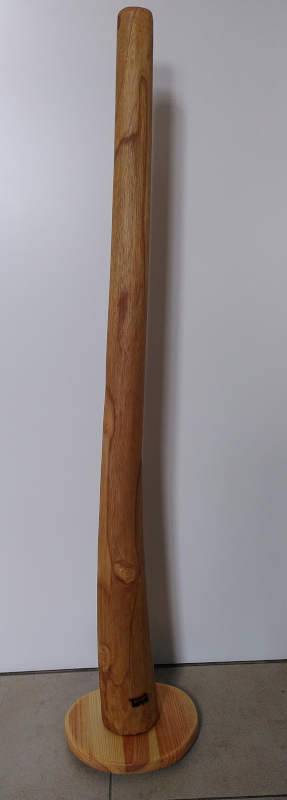 |
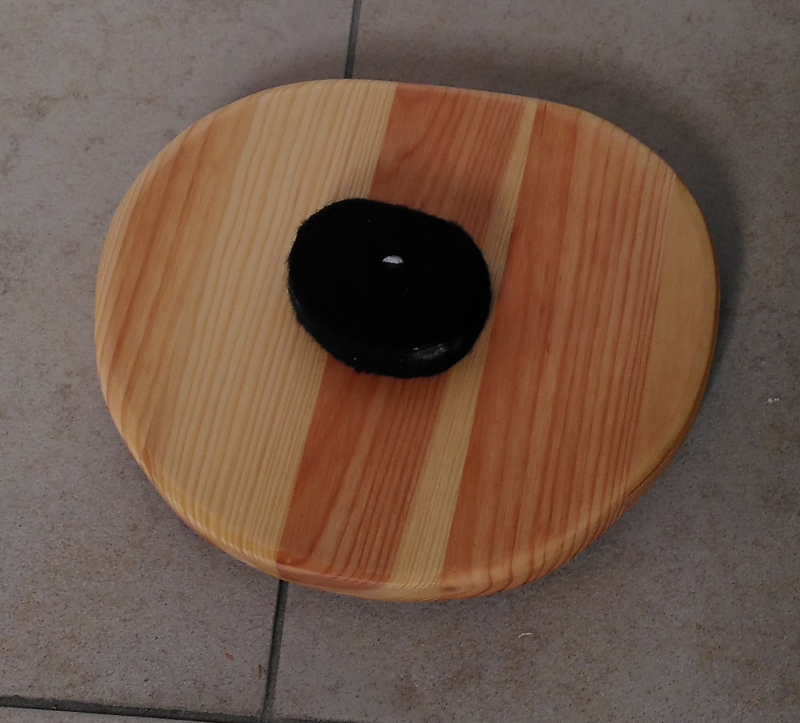 |
I didn’t have any scraps of teak (nor teak at all.) The piece of oak I have in the garage is earmarked for another project, and I didn’t want to take away from that. There aren’t any beech scraps large enough, so I settled on pine.
I traced the outline of the bell end of the horn then scaled it up to make the shape of the base. The plug is made from a tracing of the inside of the bell, then covered in felt and screwed to the base. The plug is set so that the outline of the bell matches the outline of the base. I used linseed oil on the base so that the finish at least somewhat matches the instrument.
Underneath are three felt feet that I had left over from a sewing machine base project.
As it is, I can tilt the base using the horn as a handle then pop it off of the base by pushing the horn down at an angle. Grab, tilt, pop, noise.
If your sleep apnea is mild to moderate, it may relieve you of the need to use a machine at all. If your apnea is severe (like mine,) it may reduce the pressure needed to keep you breathing. If nothing else, blowing a didgeridoo will strengthen your breathing muscles and make it easier to exhale with the CPAP mask on.
Just in case there are any doubts: yes, I really can make a didgeridoo do its thing, even if I’m not musical.
Here’s a spectrum analyser view of some rhythm exercises on my didgeridoo:
| Spectrum |
|---|
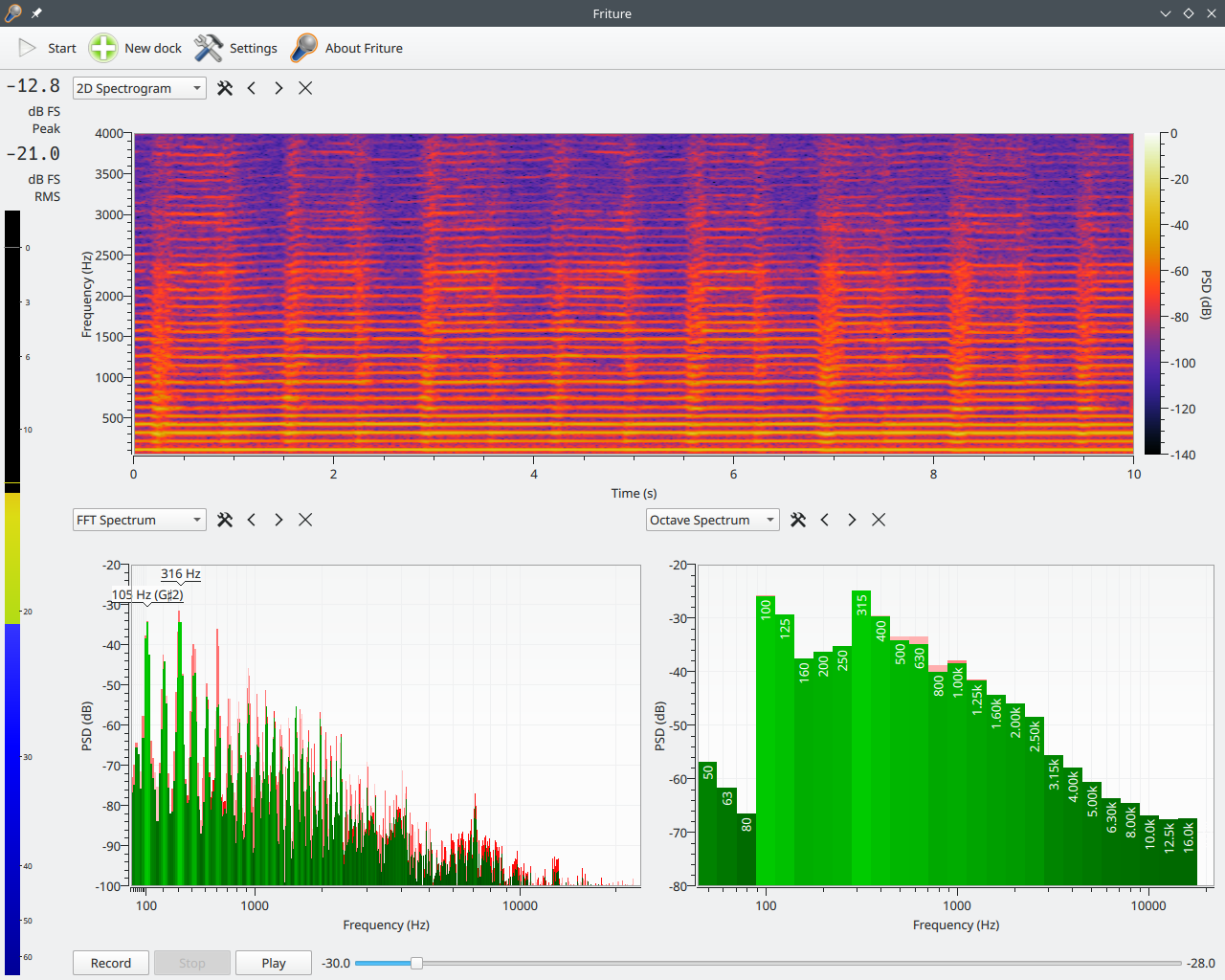 |
The base tone of my didgeridoo is about 104 herz. “About” because it isn’t exact and it moves up to about 109 herz when I “push” it hard. That is the source of the vertical lines in the 2D spectrogram above. I alternate the lower, 104Hz base tone with the slightly higher 109Hz tone. It’s not any kind of music. The rhythm is just a way to entertain myself while exercising.